


The founder of Triple Helix on the lab-to-field gap, the economics of farmer adoption, and a new council built to unstick capital in agtech.
There is a paradox at the heart of agricultural innovation. I attend many university labs and startup demos and see an amazing pipeline of ideas, including gene-edited crops, microbial inputs, autonomous vehicles, sensors, and robotics. And yet only a small fraction of them ever reaches a working farm. The technology gets invented, validated at pilot scale, and then often stalls.
Sarah Garland has spent her career working on that gap. A plant scientist with a PhD in CRISPR gene editing from Cambridge and postdoctoral work at Columbia’s Earth Institute, she founded Triple Helix Institute for Agriculture, Climate, and Society. Triple Helix is a nonprofit designed to serve as the connective tissue among researchers, entrepreneurs, investors, policymakers, and the public. Her premise is that much of what holds agricultural technology back is coordination, capital, and trust.

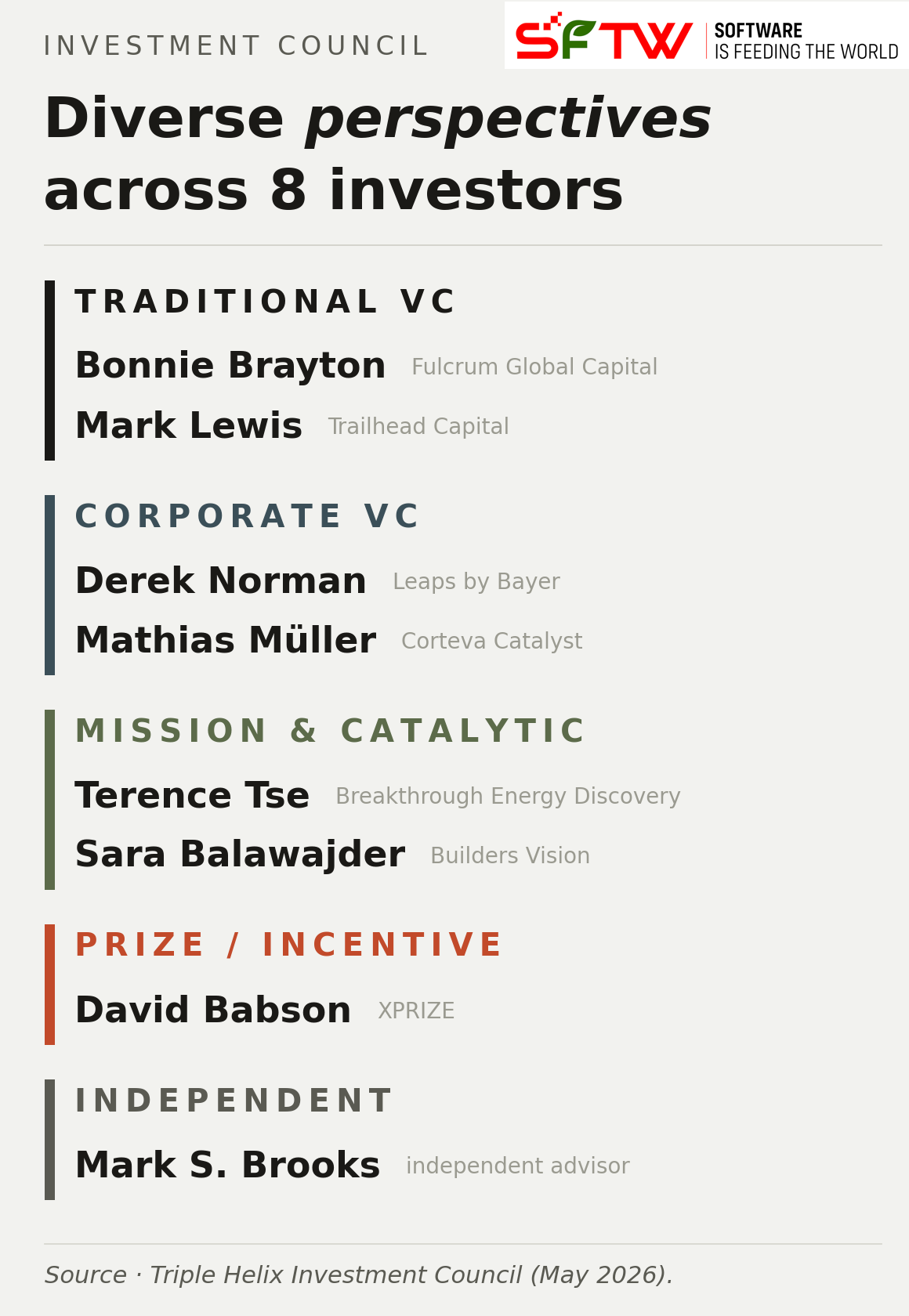
I spoke with Sarah shortly after Triple Helix launched its newest experiment: an Investment Council that brings together eight investors from across the capital stack, traditional venture firms, corporate venture arms, a mission-driven family-office platform, and a prize foundation, to ask why good agtech stalls before scale, and what could unstick it. Our conversation ranged across the organization’s origins, the economics of farmer adoption, and the design of the council itself.
What follows is a lightly edited version of our conversation.
The Organization That Didn’t Exist
Rhishi Pethe: What is the origin story of Triple Helix?
Sarah Garland: I’m a plant scientist by background, and it’s inspiring to see all of the emerging innovation at the discovery stage. But I became increasingly interested in how innovation makes it from the lab to the field. Or, often in agriculture, it does not make it from the lab to the field. So after my PhD, I stayed in academia but pivoted more into science policy and the role of biotechnology in developing more nutritious and climate-resilient food systems.
I became concerned on two fronts. The first was the lack of productive interaction among stakeholders, including academic researchers, and the manner in which they communicated their cutting-edge science to the rest of the community. The second was the polarizing rhetoric in many high-level climate and environmental circles around technology in agriculture. I was hoping to find an organization to join that shared my evidence-based and nuanced vision for the future of agtech. But I found that the NGO space was similarly polarized. So I created the organization I wished existed at the time, Triple Helix.
As a nonprofit, Triple Helix is dedicated to building cross-sector engagement and awareness around ag tech for climate action. It bridges research, industry, policy, and communication to align stakeholders around credible information and common goals that advance agricultural resilience. The wonderful part of being a nonprofit is the ability to bring together the best of academia, private-sector innovation, and government mechanisms to strengthen the entire ecosystem.
“I created the organization I wished existed at the time.”
Rhishi Pethe: If you look at the current ecosystem, you have venture capitalists, startups, big business, and academia. What is missing? What other options did you consider when you thought, “This is what I want to do, and it doesn’t exist”?
Sarah Garland: There are great benefits to being in academia, particularly the freedom of thought it brings. But I was discouraged by the lack of emphasis on engaging with practitioners. On the other side, practitioners aren’t always challenged to implement new ideas in the same way that academics are trained to do.
When it comes to science communication, outreach is often unidirectional. “Let me tell you about my science.”
In fact, we really need to listen more as researchers and understand what different types of stakeholders need to make informed, evidence-based decisions, while remaining within frameworks they can actually act on. In my current role, I’m able to bring all these pieces together.
Rhishi Pethe: How does Triple Helix actually work? How do you operationalize the idea of connecting different groups and bringing them together, given the challenges you talked about on both sides?
Sarah Garland: From the very beginning, it was important to involve different perspectives in our work. That means cross-sector and cross-discipline. I was really pleased to build a fantastic advisory team that bridges expertise, whether that’s government policy experience (we have a former Secretary of Agriculture, Dan Glickman, on our advisory team) or deep technical knowledge ranging from AI in agriculture to cutting-edge gene-editing methods. So, already in terms of the advisors we were able to put together, it showed the direction the organization was aiming to go.
Ever since then, whether through tasting events, panel discussions, or co-authored reports, everything we’ve done has brought together different perspectives, all in service of achieving agricultural resilience together, rather than further fanning the flames of division that often get more airtime.
Rhishi Pethe: You mentioned agricultural resilience. How do you define agricultural resilience, and what does that actually mean? How does the industry or a policy organization engage with you? Do they come to you with specific questions, or is it more that you’re acting as a convenor and putting forward a point of view?
Sarah Garland: One half of agricultural resilience is being strong in the face of different types of shocks and threats, whether that’s a climate shock or a supply-chain shock, both of which we’re very much already experiencing. The other half is not contributing to harm. For example, we’ve done a lot of work on innovation for biodiversity conservation.
You’ll see emphasis on both parts of resilience in the topics we cover. We’re looking to make agricultural systems more efficient and productive while also promoting nature conservation and environmental stewardship.
For the second question, it’s definitely more the latter. We have a point of view that comes from what I just said about resilience. From this cross-sector, cross-disciplinary perspective, we ask, “What are the key lever points here that we need to work on?” Whether it involves public-sector mechanisms, investment, or public understanding, the content side always comes from the Triple Helix. Then we identify the right stakeholders and leaders to bring into our work.
Rhishi Pethe: Is your theory of change that, by bringing all these different perspectives together and providing a point of view, you hope to influence some players in the ecosystem to act differently? How do you hope to bring about change within the ecosystem?
Sarah Garland: Triple Helix catalyzes high-impact ag tech innovation through facilitating stakeholder collaboration and strengthening public understanding. Those are the two verticals we work within. Very few organizations focus on the translation layer between researchers, entrepreneurs, policymakers, and the public. By filling that gap, we drive the entire space forward.
In agricultural circles, division often leads to counterproductive outcomes. We’re stalling ourselves when we can’t move past dogmatism about the future. Triple Helix can mend some of that discord. Fostering new types of collaborations, bringing together people who wouldn’t normally talk, and seeing that they actually have a lot in common, is an important role we play in this ecosystem. It’s been really encouraging to see the lightbulb go off in people’s minds: “Oh, we’re working on the same problem. How can we move forward together?”
Rhishi Pethe: I’m assuming you started with a set of assumptions about how this would play out. Looking back, are there certain things that surprised you, “Oh, I didn’t think this was going to happen,” or “This is completely different from what I thought”?
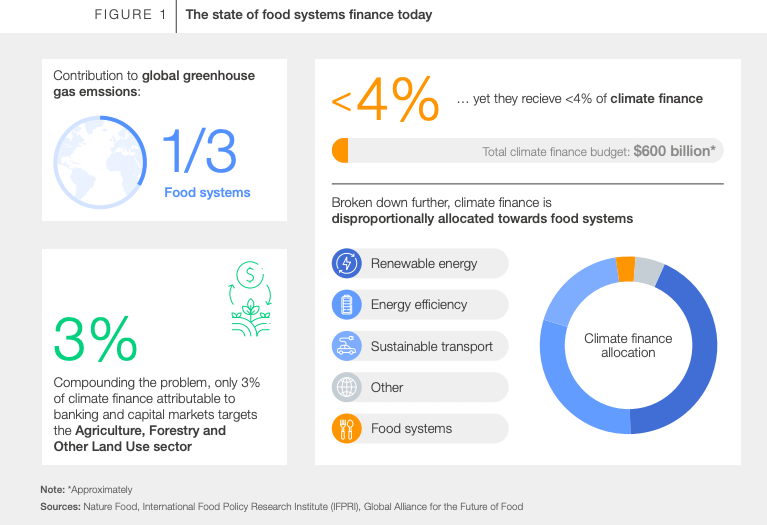
Sarah Garland: When I started Triple Helix, food and agriculture were kind of a footnote in the climate conversation. Part of the organization’s early impetus was to build awareness of the importance of food and agriculture to climate action. That has changed a lot in a short amount of time. There’s more recognition of it now. But unfortunately, many climate efforts still predominantly focus on energy. The amount of investment in food and agriculture, compared with the rest of climate investment, remains small.
So something I didn’t expect was the rapid increase in attention on food and agriculture. It’s good that we have increased attention. But within that, we need to ensure we’re making evidence-based decisions rather than falling prey to whatever narrative is popular at any given moment.
Why Promising Technology Stalls
Rhishi Pethe: When we last spoke, you said capital constraints shouldn’t stall innovations that are solving critical challenges. It sounds like a conclusion you’ve reached, or something you’ve learned over the years. How did you get to that point?
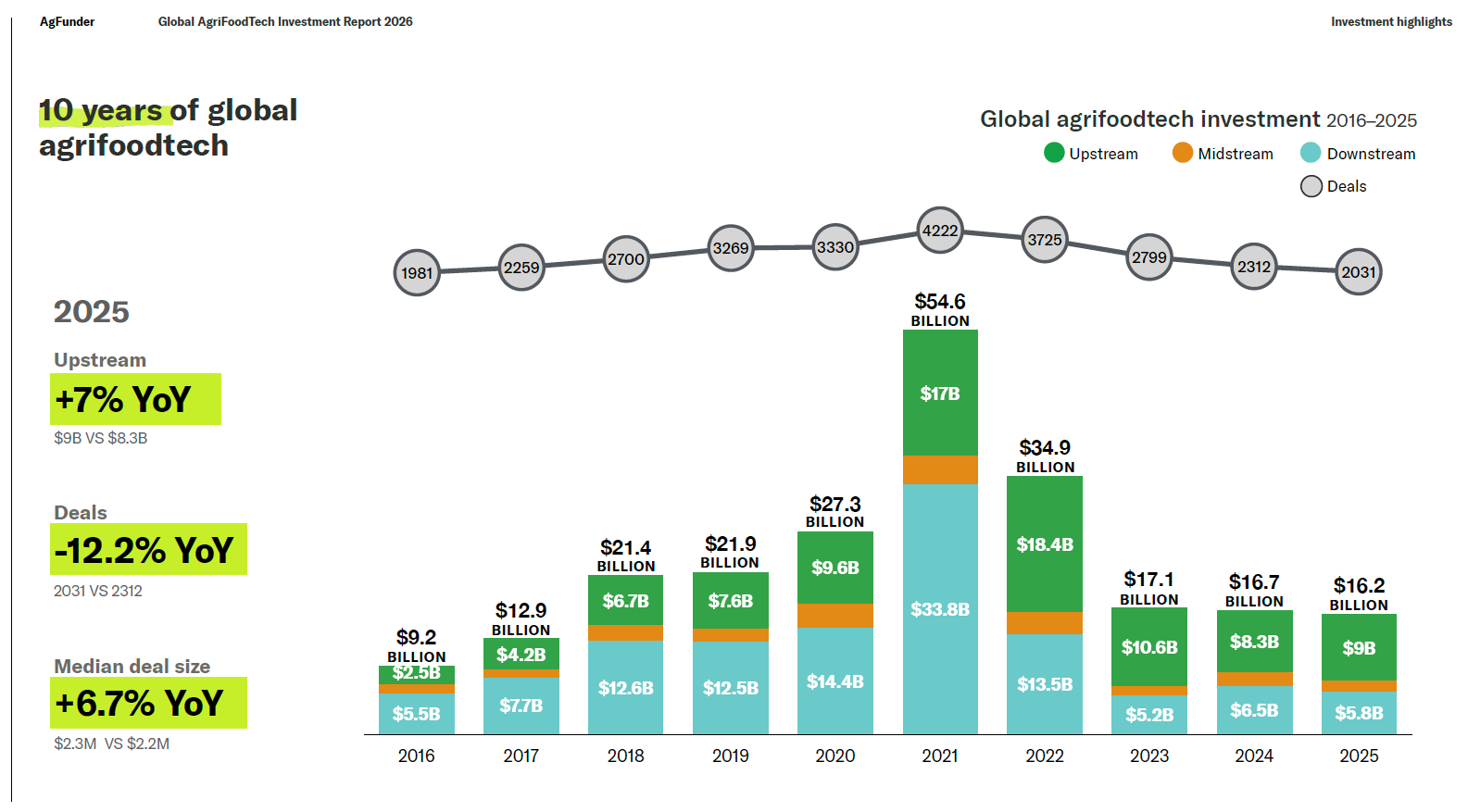
Sarah Garland: There is currently a mismatch between the urgency of the challenges facing agriculture and the situation we’re in, in which promising technologies aimed at addressing them often stall before they can be deployed at scale. Many factors contribute to that, of course.
Recently, we looked more at the public-sector side. We recognized that historically, the public sector has played a key role in advancing agricultural innovation, particularly in the United States. So we conducted a project to identify opportunities for the federal government to catalyze US ag tech innovation in a modern context. Unsurprisingly, we found that public-sector mechanisms, everything from funding proactive basic research to creating consistent regulatory pathways, are essential for de-risking emerging technology and creating an effective innovation ecosystem. But that’s only one part of the ecosystem.
Through this work in the public sector, the question kept coming up.
“What about private-sector mechanisms?”
Capital allocation is a determining factor in what innovations make it from discovery to impact in practice. That raises the question of what meaningful innovation on the private-investment side would look like, alongside public-sector innovation and the ongoing technical innovation. So that’s how we came to the topic of capital allocation and investment. It’s about understanding the key levers that influence whether high-impact technology actually reaches farmers and, eventually, consumers.
Rhishi Pethe: On the venture side, venture dollars have declined quite a bit over the last few years. But the challenges to scale or adopt also exist at the farmer level, right? When new technology comes along, it has to solve a problem, be economically viable for the farmer, and be easy to use. Multiple factors must be in place before it can scale. So, how are you thinking about that particular challenge? Yes, there’s a promising technology, but that promise must be realized through adoption and scaling.
Sarah Garland: It’s important to frame this by noting that farmers take on considerable risk when they decide to adopt a new tool. Innovators really need to understand that and provide sufficient technical validation for their product when they’re asking farmers to adopt it. So that’s point one for finding early adopters. Building trust by saying, “I understand this is a risk for you, but this is why we think it will benefit your operation.” Respecting the farmer’s perspective is really important for driving both early adoption and, of course, eventual scaled adoption.
“Farmers take on considerable risk when they decide to implement a new tool.”
Rhishi Pethe: That’s true for any technology. It has to work without posing too much risk to the person adopting it, whether that’s a farmer, an accountant, or anyone else. So, what perspective or point of view is Triple Helix bringing to the discussion to say, “Hey, we need to look at this differently than how it has been done”?
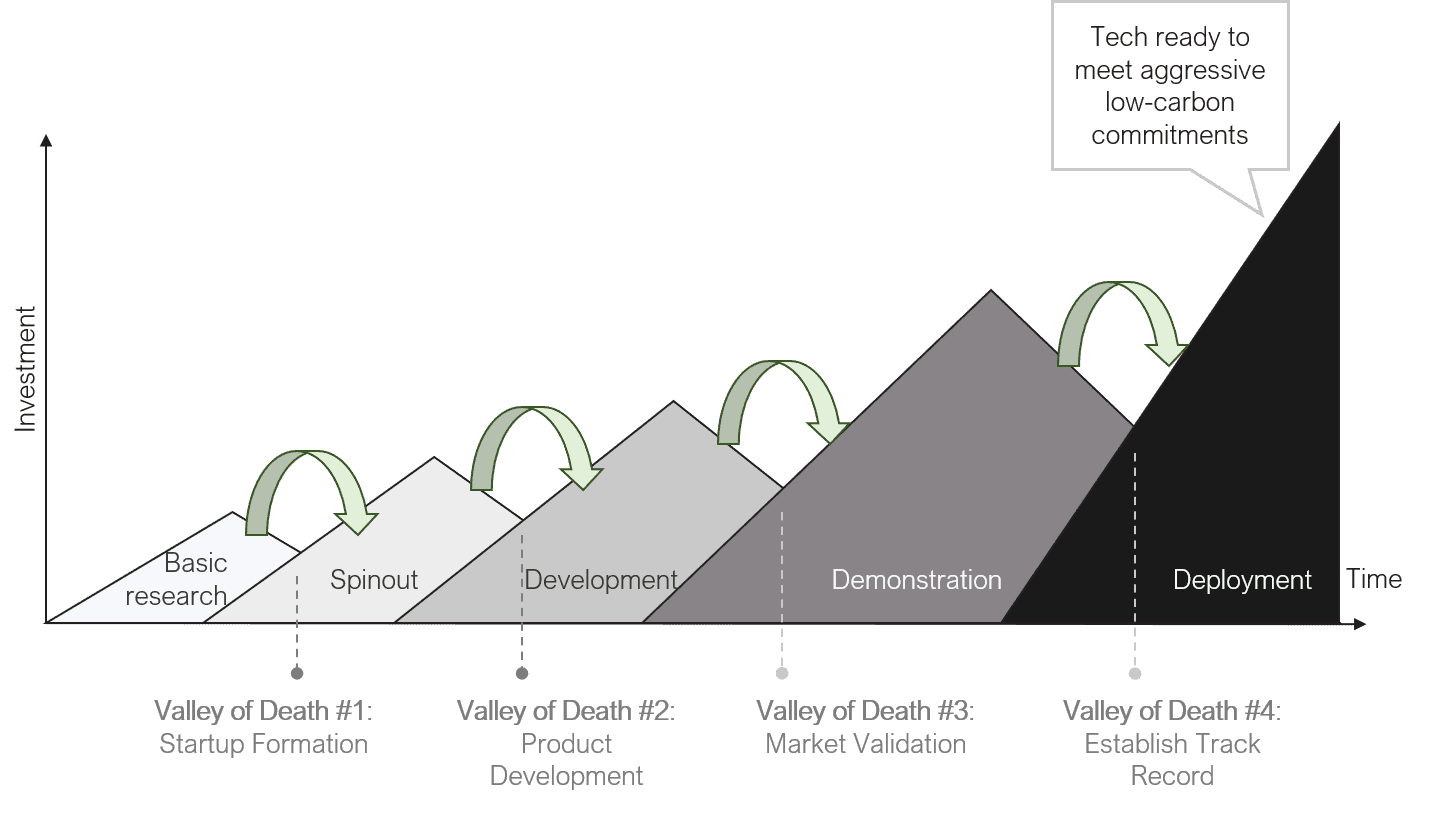
Sarah Garland: There are different stages and transition points a technology goes through: early discovery to first validation, validation to early adoption, and early adoption to eventual scale. So, from validation to early adoption, that framing of the risk farmers are taking will help overall adoption by ensuring end-user consideration is at the forefront from the very beginning of product design.
Then, if a technology has already been validated and farmers are eager to adopt it, it’s a major loss impact-wise if capital constraints impede its deployment at scale. Triple Helix engages with stakeholders across the ecosystem to improve these transitions, enabling the implementation of high-impact technologies to address critical challenges.
Inside the Investment Council
Rhishi Pethe: You recently formed this investment council. It’s a very interesting, diverse group of people you’ve managed to put together, so congratulations on that. Could you go behind the thought process? Why did you feel you needed a group of people to come together to talk about these issues?
Sarah Garland: Through our previous work and understanding the main levers in the space, it became clear that investment and capital allocation were topics to address. No one knows the opportunities and constraints facing ag tech investment better than investors themselves. So it was a no-brainer to collect perspectives from leading practitioners. We’ve demonstrated success with this strategy in our policy work, gathering insights by hosting stakeholder roundtables across the country. This council furthers our model of being a convenor: bringing together the right people who are open to thinking outside the box and generating new ideas. Few forums currently exist where these types of investors can come together, operate outside their silos, and be candid with each other.
This council brings together top investment minds in the space. To have impact, we didn’t just want a group of entirely venture-capital investors or entirely philanthropies, because then you’re only getting insight from one slice of the capital stack. I’m really thrilled by the group of participants we have assembled for the inaugural investment council. They are each extremely impressive in their own lanes, but they’re also committed to strengthening the entire ecosystem. They represent different stages of investment, different types of capital, and different perspectives on the future of agriculture.
Rhishi Pethe: What types of issues do you want this investment council to discuss? What problem statements are you throwing at them? “We think these are the top three problems, and they’re inhibiting the direction we want to go,” whether it’s resilience, adoption of technology, or a better future for farmers, or the food system.
Sarah Garland: What’s great is that I’ve been able to get the council’s input from the very early stages of this work. A lot has been written about the challenges facing ag tech. The point of the council is not to rehash the challenges. We obviously need to start with a shared understanding of them to move forward with developing solutions. But the key issues we’re beginning to discuss were not prescribed in advance. We began by having the council members themselves identify their top few challenges in this space. There’s a lot of overlap because they are all in the same general sector, but different challenges also emerge depending on the specific part of the pipeline they work in most.
So the entire process is collaborative. It’s less direct than saying, “I want you to answer this question,” but our process is to be a facilitator and convenor, not to dictate the conversation fully. We’ll get more meaningful outcomes by working through the struggle together.
Rhishi Pethe: You have traditional VCs, you have corporate VCs, you have someone with XPRIZE experience. When we talk about agricultural resilience, will you focus more on the problems facing agriculture in the developed world? What are the boundaries of the problems you’re looking at for this investment council that they have to discuss or are willing to discuss?
Sarah Garland: Science, of course, has no boundaries. Innovation is happening all over the world, and that’s really exciting. For the sake of this council and investment mechanisms, we’re primarily focusing on the US ecosystem, and any policy implications would be US-centered. We obviously operate in a global trade environment, so I expect that insights will emerge from comparisons of what different countries are doing better or worse, and how to develop the entire cross-sector implementation ecosystem. But our focus on strengthening the pipeline from the discovery stage through to impact in practice is currently on the US.
Rhishi Pethe: So it’s US-focused; it’s a lot of science; it’s about how you do investments. Will there be discussions around policy and financing models?
Sarah Garland: There are funding mechanisms and external constraints that influence how capital moves through the system. It’s important to consider these factors together, because otherwise you end up putting band-aids on aspects of the problem that aren’t really the root cause. This group will be exciting to work with as we uncover the underlying constraints and identify the highest-impact solutions.
There are also opportunities to guide entrepreneurs, so they have more insight into what investors are seeing. Rhishi, you work with a lot of spinouts from the research-to-early-entrepreneurial side. It’s never too early to think about what a growth-stage investor is thinking and to make sure you’re setting yourself up for success. But at the moment, we’re focused on leverage points that will unlock the entire ecosystem.
Rhishi Pethe: I’m guessing some of the incentives for a corporate VC are a little different from those of a traditional VC, versus someone looking at government- or state-provided funding. So do you let the council figure out those tensions? How do you create an environment where these conflicts of interest don’t degrade the quality of the conversation that needs to happen? What role are you specifically playing to make sure that doesn’t happen?
Sarah Garland: I think the fact that they have different incentives is a strength of the council. If you had everyone coming from a corporate perspective, for example, you wouldn’t see the other actors and the roles they’re playing. So I see those tensions as a benefit rather than a constraint. I invited these individuals specifically because of their willingness and ability to listen to other perspectives and collaborate across their own interests.
“I see those tensions as a benefit rather than a constraint.”
Rhishi Pethe: If you hear all these diverse voices represented on the council, are there any voices missing? Do you feel this will come at these issues from all possible angles? Are there any blind spots?
Sarah Garland: Our council members have direct experience in their current roles, but many also have backgrounds in other aspects of ag innovation, including government work. I’m optimistic that we’ll be able to address a pretty wide range of challenges.
But if we reach a point where we realize we need more perspectives, there’s always an opportunity to bring in more people and grow the council in the future.
Rhishi Pethe: Are they also going to talk about different funding models to support innovation?
Sarah Garland: It’s all about identifying the core levers. If a different funding mechanism would indeed catalyze the space, then that’s an avenue worth exploring. You mentioned earlier that we have someone from XPRIZE on the council, and I’ve been involved in the XPRIZE orbit for a couple of years. That’s a bold model for incentivizing innovation. When there are critically important areas of innovation that existing types of capital aren’t addressing effectively, it’s time to think outside the box and maybe try something new.
Common Ground, and the Road Ahead
Rhishi Pethe: So, how will you communicate what the council is discussing? Is that going to be in the form of thought papers? How do we access the value of the discussions between you and the council members?
Sarah Garland: We just got the ball rolling at the beginning of June, and we’re working together to pinpoint the actionable areas we want to explore further. After a few more meetings, we’ll have that direction more solidified, and we’ll be able to share some early ideas and insights. From there, the goal is to engage more stakeholders in bringing those concepts to life.
Rhishi Pethe: It’s a very interesting idea to bring this council together to debate and discuss different ways innovation should be funded, financed, rolled out, and adopted. If you look further out and you’re looking back: “Hey, this was a great idea. Sarah, great job, you put this council together, and it worked out fantastically well.” What are some things you would see changed for you to say, “This worked really well”?
Sarah Garland: I expect that insights and strategies derived from this council will lead to better coordination across capital types at key transition points, so that no high-impact technology is left behind. That will come from breaking down silos, developing a common understanding, and aligning toward a shared vision, thereby facilitating the flow of capital more effectively.
I also think it’s important that this initiative builds on our previous work on public-sector mechanisms. We need to prioritize both private- and public-sector innovation to implement high-impact agtech in practice. The more we can coordinate all the levers at our disposal, the better.
Rhishi Pethe: Let’s say a few years down the line, it’s, “It wasn’t a bad idea, but it just didn’t work out the way I thought it would.” If you’re doing a premortem, what are some reasons this wouldn’t work?
Sarah Garland: Bringing people together to tackle hard questions is never a bad idea, so everything we learn from this experience will be a meaningful contribution. In science, you often publish only when you get exciting results, but negative results are also really important for building our knowledge base. So everything we learn from this experience will have an impact.
There are inherent challenges in agriculture that are daunting, and coordinating actors across sectors and across incentives is easier said than done. But it’s important to foster that type of vision. There are eight members of the council, but the aim is for this to have an impact far beyond those eight members and to inspire more thought about how we can be creative about agtech investment, rather than just feeling stuck where we are right now. The more we can provide optimism and solutions, the better.
“The more we can provide optimism and solutions, the better.”
This is excellent -- I sent it to a provost friend whose university needs to re-invigorate their ag program to teach and use the latest technologies. The use part is key -- getting tech out into the (literal) field.